
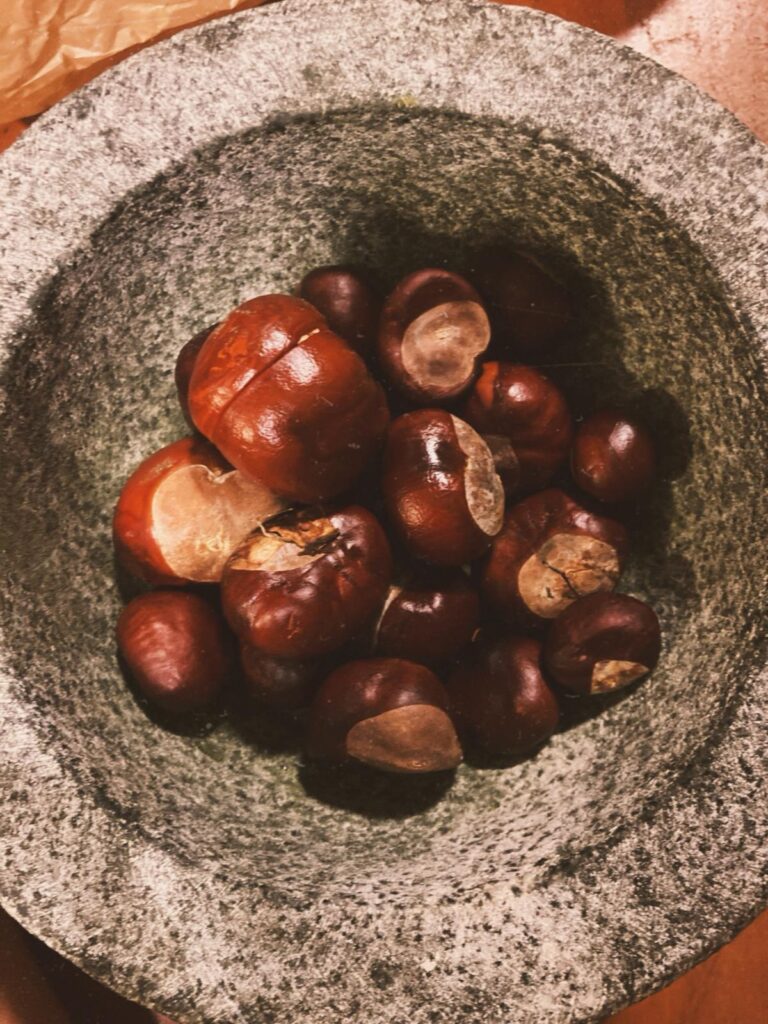
Horse chestnut
natural laundry detergent
Autumn is the perfect time to start your natural laundry journey. This season offers up some of nature’s most overlooked treasures, one of which is the horse chestnut (aka conker).
When the horse chestnuts begin falling in September through October, you can find them scattered beneath trees in parks, forests, and even on city streets, and they are not only for childhood games. Look for shiny, uncracked conkers, gather them fresh, and they can be transformed into a natural laundry detergent.
Choosing natural alternatives like horse chestnut detergent isn’t just a DIY project, it’s a quiet, everyday act of care. For your skin, your home, and the environment.
about horse chestnut & saponin
Horse chestnuts contain a natural compound called SAPONIN. Saponins are plant-based chemicals that act as gentle, natural surfactants. In simpler terms, they help break down dirt, lift oils, and create a mild cleansing foam when mixed with water, like traditional soap. This is the same reason soap nuts (Sapindus) are often used for eco-friendly laundry, but soap nuts often travel halfway around the world. Horse chestnuts, on the contrary, are local, seasonal, and free if you forage them yourself.
Saponins get their name from the Latin word sapo, meaning soap. When plant material rich in saponins is soaked or boiled in water, it releases a soapy liquid. This gentle cleanser is safe for most fabrics and is gentle on sensitive skin, making it a great alternative to commercial laundry detergents filled with synthetic chemicals, perfumes, and irritants.
WARNING: Horse chestnuts are not edible. They’re toxic if consumed, so please keep them out of reach of children and pets.
Laundry detergent guide
– Two simple methods: dried or Liquid –
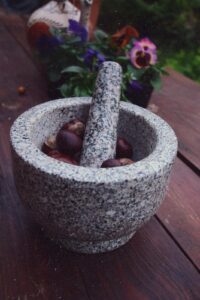
- Crack them open – I use my pestle for this, but you can use whatever you at home: hammer, etc…
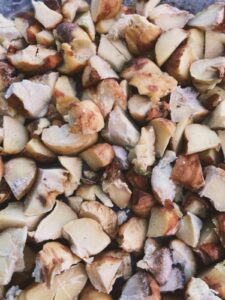
- Remove the brown outer shell – you only need the pale inner nut (this contains the most saponins)
- If you plan to store them long-term, do this in batches. Peeling is easier when the nuts are still fresh.
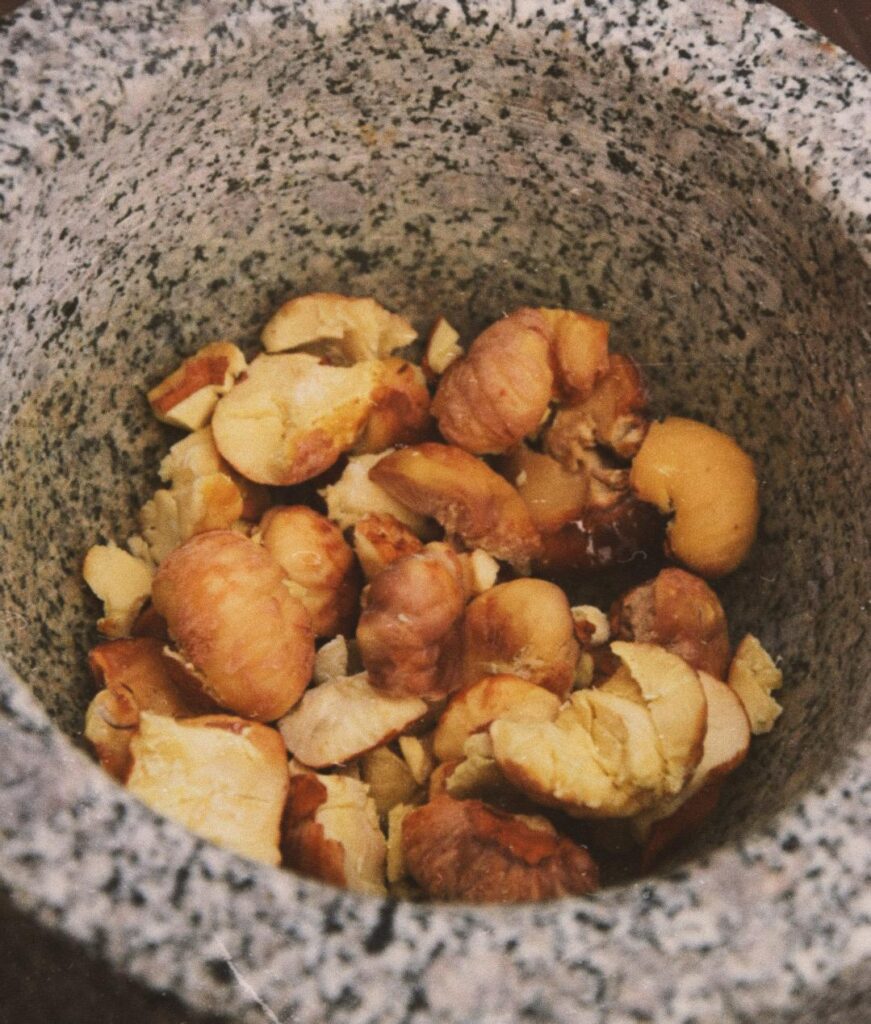
Dried chestnut detergent
– for long-term use –
Great for stocking up during autumn and using all year round. You can use dried horse chestnut pieces directly, similar to soap nuts.
how to make:
- After peeling, chop the inner nuts into small pieces.
- Dry them thoroughly using a dehydrator, oven on low heat (50°C), or lay them out and leave in a warm dry place for several days.
- Store in a cloth bag or grind into powder and store in a jar.
– soaked ground chestnut –
- Take 1-2 tablespoons of ground chestnuts
- Soak in a cup of hot water for 10–15 minutes.
- Strain and pour the liquid into your washing machine as detergent.
– Dried Pieces Straight in the Drum –
- Put 4-5 pieces (2 tbsp.) of chestnuts into a cotton bag or a tied sock.
- Drop the bag into the drum of your washing machine.
- You can reuse the same bag for 2–3 washes, or until the chestnut pieces stop producing a soapy feel when wet.
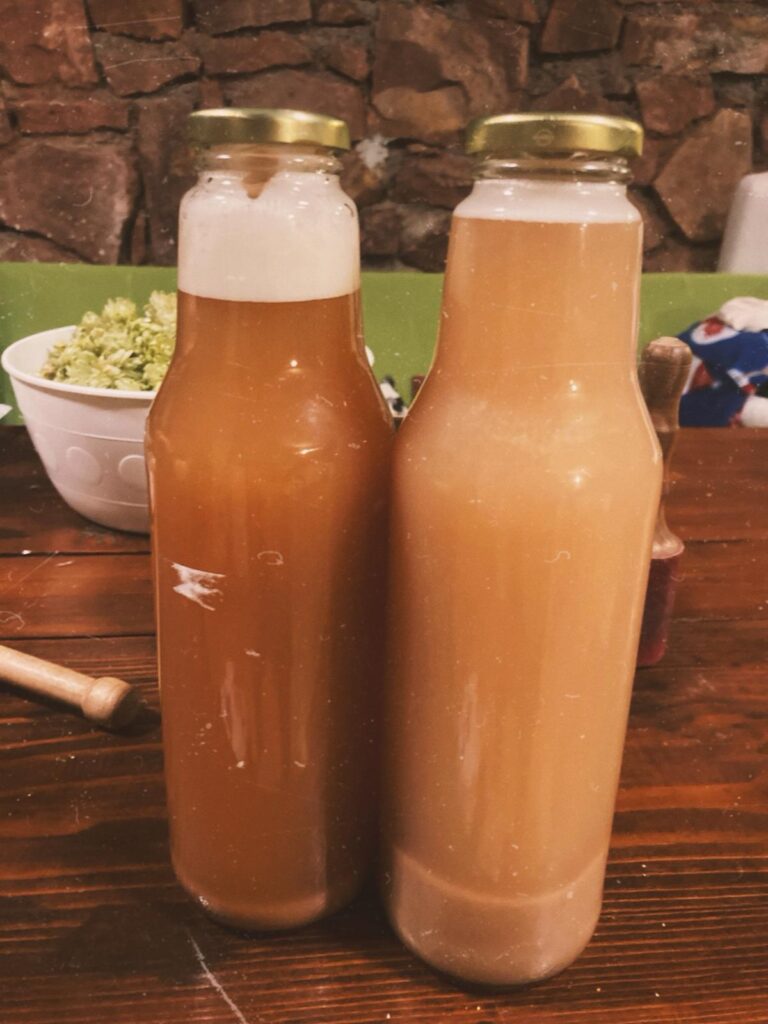
LIQUID DETERGENT
– For immediate use –
what you’ll need:
- 6-7 peeled chestnuts
- 1 liter hot water
- A jar or bowl with a lid
- A sieve or cloth for straining
– soaked method –
- Place the chestnuts in a jar and cover with hot water.
- Let it sit for 8–12 hours (or overnight).
- Strain the liquid using a fine sieve or cloth.
- Use it directly or store it in the fridge.
– cooked method –
- Chop the peeled nuts into small pieces and add the water.
- Bring to a boil and simmer for 15–20 minutes. The water will turn cloudy and yellowish when it’s ready.
- Let it cool, strain and store in the fridge.
How to use:
- Use 150–200 ml per load of laundry.
- Pour into the detergent drawer or directly into the drum.
- Use within 5-7 days. For longer storage, freeze in ice cube trays and defrost as needed.
– Guidelines & tips –
- Wash at and above 30-40°C, warm water helps activate the saponins.
- Ideal for coloured and everyday laundry, cotton, linen, synthetics, and blends.
- Not recommended for delicate fabrics like wool or silk, always do a patch test if unsure.
- For white laundry and tough stains, boost the wash with a tablespoon of washing soda or baking soda.
- For pre-treating stains, use gall soap before washing.
- Add a few drops of essential oil (like lavender, citrus, or tea tree) to the detergent before use if you prefer a light, natural scent.
- For extra freshness or softness, combine with vinegar as a natural fabric softener in the rinse compartment.
Natural solutions may take a little more time or intention, but they offer something store-bought products can’t: a sense of mindfulness, sustainability, and self-reliance. Whether it’s laundry, cleaning, skincare, or food, shifting toward gentle, natural, and self-made alternatives are a powerful way to live with more awareness and less waste.
By replacing conventional laundry products with simple, foraged solutions, we reduce our exposure to harsh chemicals, cut down on plastic waste, and reconnect with the natural rhythms of the seasons. Over time, these small changes add up, lightening our footprint and deepening our relationship with the world around us.
with love, Rebeka