Yoni Steaming
Herbal wisdom as feminine self-care
In many traditional cultures, women were taught from a young age how to care for their womb as part of ongoing self-care and feminine hygiene, not only during pregnancy or illness. Yoni steaming, also known as vaginal steaming, is a simple practice deeply rooted in ancestral herbal knowledge.
For a long time, my relationship with my Yoni felt distant and complicated. There was closeness at times, but also numbness, confusion, and a sense of disconnection that I didn’t quite know how to name. Yoni steaming became one of the small steps that helped me move closer to myself – not all at once, not in a dramatic way, but gently. I often turn to lavender, red raspberry leaf, or yarrow, especially at times of transition, like after ending contact with a partner. This practice supports my body as it releases, settles, and reclaims its own space, offering care not only to my nervous system, but also to my Yoni as it moves through the energetic process of letting go.
At its essence, Yoni steaming is a ritual of warmth, rest, and listening. Warm herbal steam rises to the vulva, inviting circulation, softness, and presence in a part of the body that is often ignored, rushed, or held in tension. Beyond physical support, the practice offers a way to restore relationship with the womb as a place of inner guidance, source of creativity, emotional and ancestral memory.
In a world that asks women to stay productive and disconnected from their cyclical nature, yoni steaming can become a foundational self-care ritual: slow, nourishing, and deeply feminine.
– reconnecting to the womb –
The word Yoni comes from Sanskrit and is often translated as “sacred space,” “source,” or “womb of creation.” In the context of the female body, Yoni does not refer only to the reproductive organs, but to the entire pelvic and womb space as a living centre of creative energy, intuition, and embodied wisdom. It is understood as a receptive, sensing, and sacred sensory and energetic space rather than a body part.
Physical Benefits of Yoni Steaming
- Improved pelvic circulation
- Balancing hormones
- Detoxification of the uterus
- Softening of tight or cold sensations in the womb area
- Menstrual comfort and cyclical awareness
- Post-bleeding or post-birth recovery (when fully healed)
- A sense of cleanliness without disrupting vaginal flora – the warmth of steam helps tissues relax and can support the body’s natural cleansing processes without internal interference.
- Pain relief
Emotional & Energetic Benefits
- A sense of grounding and emotional release
- Relaxing the nervous system
- Increased body awareness and sensitivity
- A feeling of safety in the pelvic space
- Greater self-compassion toward our bodies
– Softening What Is Held –
The pelvis is closely linked to emotional and ancestral memory. Experiences of stress, grief, trauma, shame, or suppression often settle here. Many women carry stored tension, unprocessed emotions, ancestral memory or numbness in the pelvic area, often without realizing it.
Yoni steaming creates a rare combination of privacy, stillness, and warmth, which can allow emotions to surface gently. This might show up as a wave of emotion, a sense of relief, or simply a deeper exhale. For some women, this reconnection feels grounding and soothing. For others, emotions, memories, or insights may gently surface. All experiences are valid.
There is no requirement for release. The practice is not about “clearing trauma,” but about offering conditions where the body feels supported enough to respond honestly in its own timing, whether that response is rest, sensation, or feeling nothing at all.
– Yoni steaming guide –
– preparation –
- Choose a time when you won’t be rushed
- Eat light and hydrate well, drink herbal tea beforehand
- Create a warm, private space
- You may set an intention, but approach the practice with curiosity rather than expectation – emotionally, it can help to approach the practice with no expectation, allowing the body to lead rather than the mind.
– Choose your herbal ally –
Choose herbs based on your current needs. Herbs can be used alone or blended intuitively:
- Warming herbs encourage circulation
- Soothing herbs support softness and tenderness
- Aromatic plants calm the nervous system
- Mugwort – warming, circulatory, traditionally associated with the womb, midwives, maternal lineage and dreams
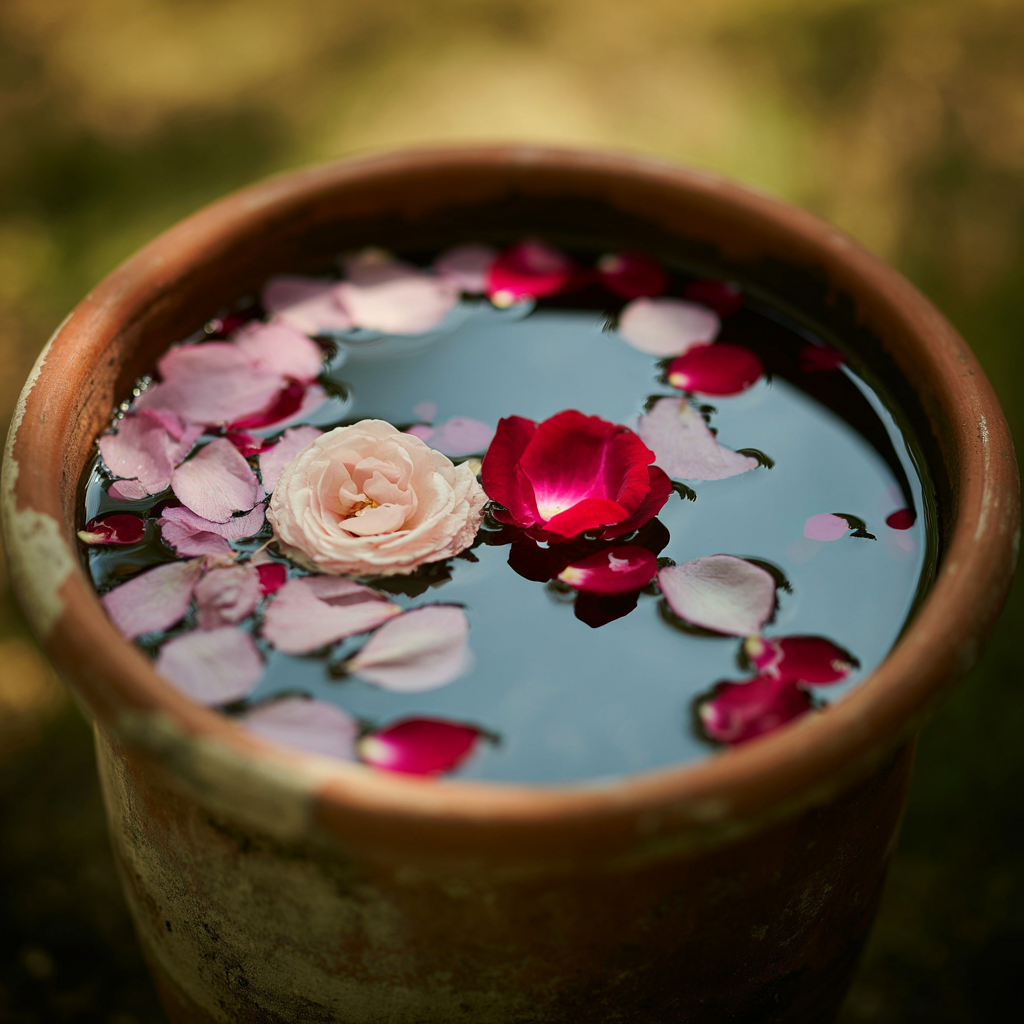
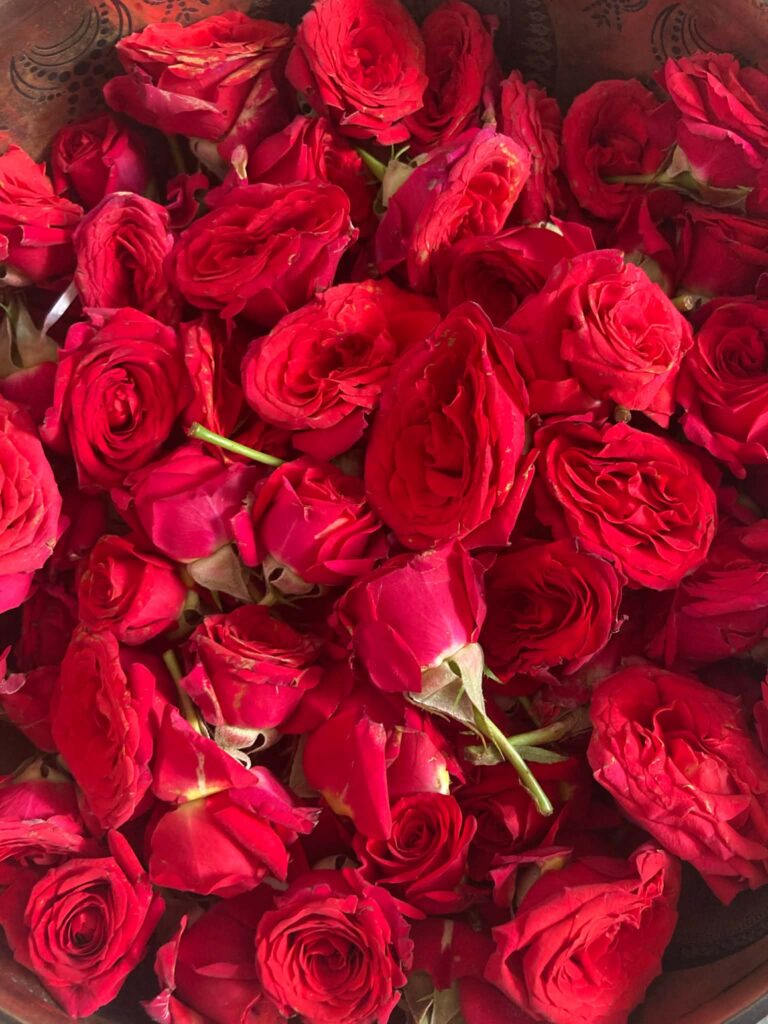
- Rose – soothing, heart-opening, supportive for tenderness and emotional healing
- Calendula – gentle, supportive to tissues, associated with repair and softness
- Lavender – calming, supportive for relaxation and nervous system regulation
- Basil or Tulsi – warming, clarifying, energetically protective
– Practice –
- Prepare a pot of hot water and add your chosen herbs.
- Allow the herbs to steep for 5–10 minutes.
- Place the pot safely under a steaming stool or similar setup. (chair with a central opening or a low stool or squat setup, where you hover comfortably above the steam with strong support under your feet)
- Sit or squat above the steam, keeping a comfortable distance – the steam should feel warm, never hot or burning.
- Wrap yourself with a blanket or shawl to hold the warmth.
- Steam for 10–20 minutes, or less if that feels right.
- Rest afterward and keep the lower body warm.
You may choose to accompany the steam with breath awareness, mantra, prayer, or simple presence, allowing the practice to be both grounding and devotional.
safety tips
Always test the steam temperature with your hand first & make sure the pot or bowl cannot tip or shift
How Often to Practice
less is often more – the body benefits most when the practice is approached with moderation, awareness, and respect for individual cycles. For most women, 1–2 times per month is ideal as ongoing self-care.
When to Pause or Avoid Yoni Steaming
- Pregnancy
- If it makes you feel depleted rather than nourished
- Active bleeding, including menstruation
- Acute infections or unexplained pelvic pain
- Immediately after surgery or birth
- Times of emotional overwhelm or dissociation
This practice is meant to support wellbeing, not override the body’s signals. If you are unsure, pause, stop, or choose a different form of care.
– Care as relationship –
Yoni steaming is not about fixing the womb. It is about remembering relationship – with the body, with plants, with warmth, and with feminine rhythms that unfold slowly.
Practiced with care and discernment, it can become a quiet anchor in a woman’s self-care landscape: a reminder that the womb is not separate from daily life, but an integral part of how we feel, sense, process and move through the world.
with love, R